
IADC codes explained: reading a roller-cone bit specification
What each of the three digits means, what the suffix letter adds, and what the code deliberately does not tell you about the bit you are buying.
What the three digits actually mean
Every roller-cone bit sold in Europe carries an IADC code — three digits, often followed by a letter. It was defined by the International Association of Drilling Contractors so that a bit from one factory can be compared with a bit from another. It does not describe performance. It describes the cutting structure, the formation the bit was designed for, and the bearing and gauge protection. Read it as a specification, not as a quality rating.
First digit — cutting structure and formation series
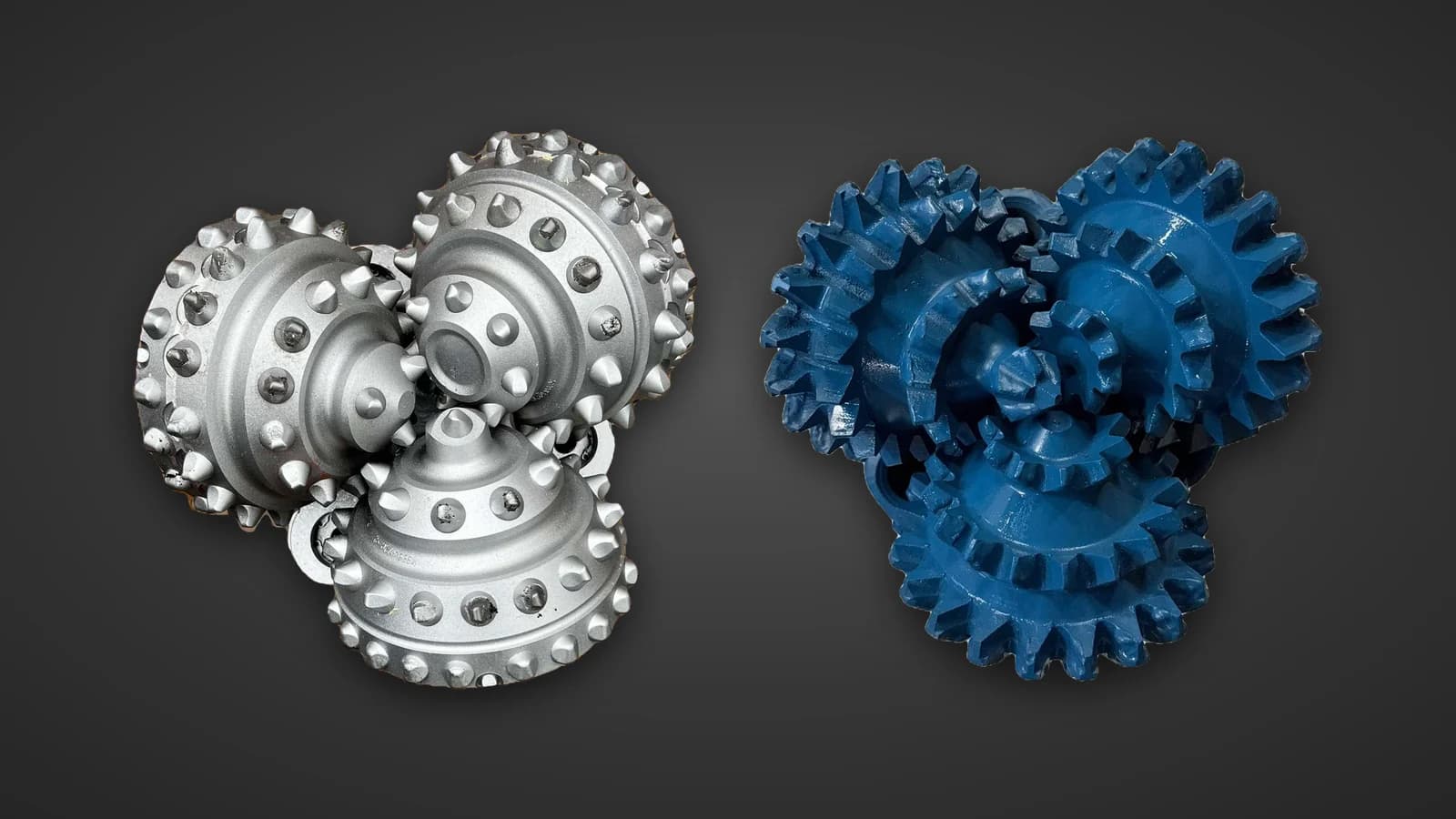
- 1, 2, 3 — steel tooth (milled tooth) bits. 1 = soft formations, 2 = medium, 3 = hard.
- 4, 5, 6, 7, 8 — tungsten carbide insert (TCI) bits. 4 = soft, 5 = soft-to-medium, 6 = medium-hard, 7 = hard, 8 = extremely hard.
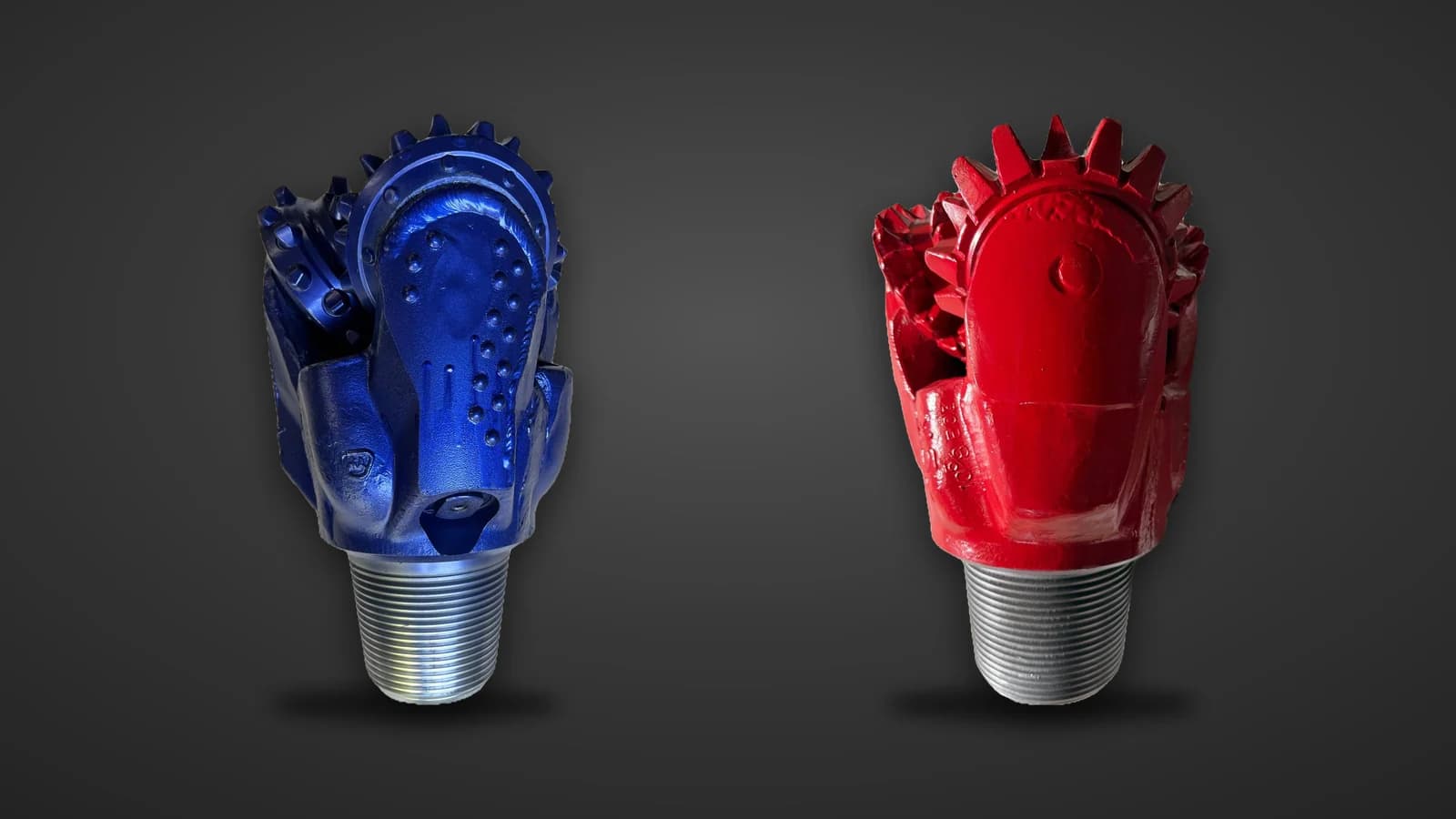
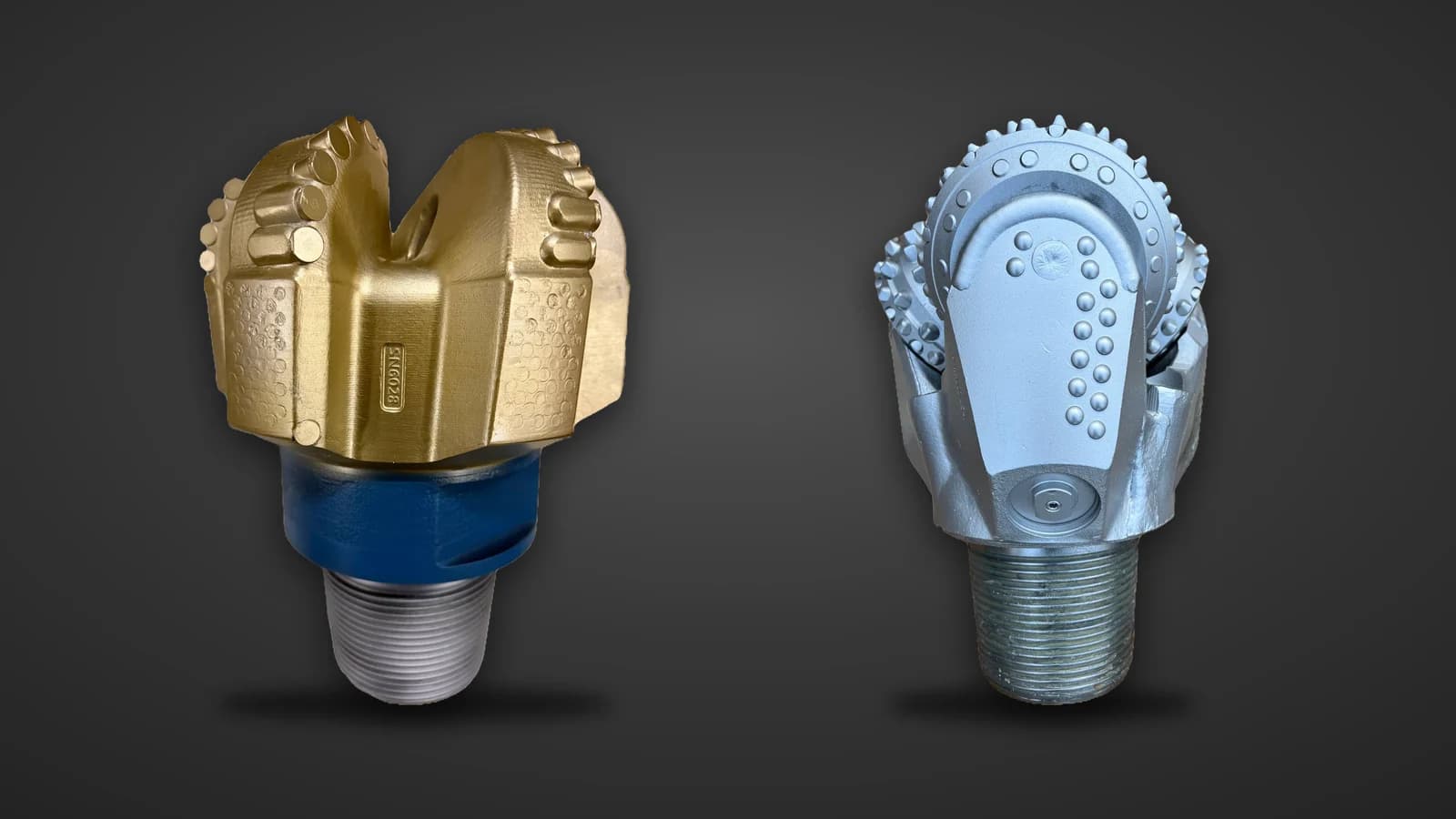
So a 1xx is a long-toothed steel bit for clay and sand, and a 7xx is a short-button carbide bit for granite. The jump from 3 to 4 is the jump from milled teeth to carbide inserts — that is the single most useful thing the code tells you.
Second digit — formation hardness within the series
A number from 1 to 4 that subdivides the series: 1 is the softest part of the range, 4 the hardest. Compare a 512 with a 542: same series, same bearing, and only the middle digit moves. Both are carbide bits, but the 542 is built for the harder end of that band, with shorter, blunter inserts.
Third digit — bearing and gauge protection
- 1 — standard roller bearing, open.
- 2 — roller bearing, air-cooled (for air drilling).
- 3 — roller bearing, gauge protected.
- 4 — sealed roller bearing.
- 5 — sealed roller bearing, gauge protected.
- 6 — sealed friction (journal) bearing.
- 7 — sealed friction bearing, gauge protected.
This digit is where the money is. A 537 and a 531 have the same cutting structure, but the 537 has a sealed journal bearing with gauge protection and will typically last several times longer downhole.
The optional letter
A suffix letter marks a special feature: X for chisel-shaped inserts, Y for conical inserts, C for a centre jet, G for extra gauge protection, A for air application, E for extended nozzles. In our stock you will see codes like 545X, 527X, 422Y, 211C and 537G.
Reading real codes from stock
| Code | Meaning |
|---|---|
| 115 | Steel tooth, very soft formation, sealed bearing with gauge protection |
| 211 | Steel tooth, soft-medium, open roller bearing |
| 231 | Steel tooth, medium, open roller bearing |
| 437 | TCI, soft, sealed journal bearing with gauge protection |
| 517 | TCI, soft-medium, sealed journal bearing, gauge protected |
| 537 | TCI, medium, sealed journal bearing, gauge protected |
| 622 | TCI, medium-hard, air-cooled roller bearing |
| 732 | TCI, hard, air-cooled roller bearing |
A quick sanity check: if someone offers you a "537 open bearing", the offer contradicts itself. The 7 in the third position is the sealed journal bearing.
What the code does not tell you
The IADC code says nothing about steel grade, carbide grade, weld quality, seal compound or manufacturing tolerance. Two bits stamped 537 from different factories can differ by a factor of three in life. The code narrows your choice to the right class of bit; the manufacturer, and your own dull-bit records, decide which one to buy inside that class.
It also says nothing about hydraulics. Nozzle count and size are specified separately, and in soft formations bit hydraulics often matter more to the penetration rate than the cutting structure does.
Using the code when you buy
- Establish the formation hardness first — that fixes the first two digits.
- Decide how long the bit must stay downhole — that fixes the third digit.
- Only then compare prices between manufacturers within that code.
If you tell us the code you have been running and how it dulled, we can usually tell you whether the answer is a different code or simply a better bit at the same code.